On this page
- What does "tracking macros on Thanksgiving" actually mean?
- Why it matters more than one meal suggests
- What a macro tracker actually needs on Thanksgiving
- Step-by-step: how to track macros on Thanksgiving
- Example day: three ways to handle Thanksgiving
- What good looks like
- Mistakes to avoid
- Handling leftovers the macro-friendly (and safe) way
- A note for people with health conditions
- How ProteinLog helps
- Frequently asked questions
Quick Answer: To track macros on Thanksgiving, plan the day around one big meal, keep your earlier meals protein-forward and simple, build your plate protein first, log a fair estimate of everything (including drinks), and go straight back to your normal routine the next meal. One generous dinner will not undo months of steady habits; drifting away from tracking for the next six weeks is the bigger risk.
Thanksgiving 2026 falls on Thursday, November 26 in the US. For anyone counting protein, carbs, and fat, it is the hardest single meal of the year to log: dishes made by other people, recipes nobody wrote down, grazing that starts at noon, and a dessert table. This guide shows a practical way to handle it, whether you want precise numbers or just want to stay roughly on track.
What does "tracking macros on Thanksgiving" actually mean?
Macro tracking means logging the protein, carbohydrate, and fat in what you eat, usually against daily targets. If you are new to the idea, our guide on how to track macros covers the basics.
On a normal day, you can weigh, scan, or look up most foods. On Thanksgiving, you will usually have a plate of home-cooked dishes with unknown recipes. So tracking on the day is less about precision and more about awareness: knowing roughly where you landed, so the meal stays a single event rather than the start of a six-week slide.
There are three realistic approaches, and none is the "right" one for everyone:
- Full tracking: estimate every dish and drink as closely as you can.
- Light tracking: log the earlier meals normally and one rough estimate for dinner.
- Planned pause: decide in advance not to log the big meal, then resume at the next meal.
All three can work. What tends not to work is an unplanned pause that quietly lasts until January.
Why it matters more than one meal suggests
Holiday weight gain is smaller than the myth, but it sticks
The popular claim is that people gain five pounds or more between Thanksgiving and New Year. A prospective study of 195 adults in the New England Journal of Medicine found the real average was much smaller: 0.37 kg (about 0.8 lb) over the holiday period. The researchers also found that this gain was not reversed in the following months, and a commentary on the study noted that holiday gain accounted for about half of participants' yearly weight change, with people who were already overweight gaining more on average.
A 2017 narrative review of later studies reported consistent adult holiday gains of roughly 0.4 to 0.9 kg. The lesson is reassuring and slightly sobering at the same time: one dinner is not a big deal, but the season adds up if nothing changes.
Self-monitoring is one of the few strategies with evidence
A 2020 systematic scoping review looked at 39 studies of festive periods. Of the 23 observational studies measuring body weight, 70% found significant increases. Across the six intervention studies it found, the approaches that helped limit gain were self-weighing or self-monitoring and intermittent fasting.
The best-known example is a randomized controlled study in The BMJ with 272 adults over the Christmas period. People who weighed themselves regularly, got simple weight-management tips, and saw how much activity it would take to burn off common festive foods averaged a 0.13 kg loss, while the comparison group gained 0.37 kg. The difference was modest, but the intervention was brief and cheap. Food logging is a close cousin of that kind of self-monitoring: it keeps you aware without banning anything.
The real risk is the "I already blew it" spiral
Most people who track for months do not lose progress because of one plate of stuffing. They lose it because a big meal turns into a long weekend of leftovers, then a December of "I'll restart in January." Having a plan for the day after is as important as having a plan for the day itself.
What a macro tracker actually needs on Thanksgiving
You do not need a food scale at the dinner table. You need a few simple tools and a sense of which dishes are protein-heavy, which are carb-heavy, and which hide a lot of fat.
A rough map of the Thanksgiving table
The table below groups common dishes by their main macronutrient. It is a general guide, not nutrition data: recipes vary enormously, and the same "mashed potatoes" can be mostly potato or mostly butter and cream. For specific numbers, look up the closest match in a database such as USDA FoodData Central or check the label on anything store-bought.
| Dish type | Main macro to expect | Common hidden extras | Logging tip |
|---|---|---|---|
| Roast turkey, white meat | Protein | Skin, butter basting | Log skin separately or pick a "with skin" entry |
| Roast turkey, dark meat | Protein and fat | Skin, drippings | Choose a dark-meat entry rather than generic turkey |
| Ham | Protein and fat | Sugary glaze | Add the glaze as its own item if it is thick |
| Mashed potatoes | Carbs | Butter, cream, cheese | Assume a richer recipe if it tastes rich |
| Stuffing or dressing | Carbs and fat | Butter, sausage | Log by cup or by plate portion |
| Gravy | Fat | Drippings, flour | Log by tablespoon or ladle |
| Green bean casserole | Fat and carbs | Cream soup, fried onions | Do not log as plain green beans |
| Roasted vegetables | Carbs | Oil, butter, honey | Add a small amount of oil |
| Cranberry sauce | Carbs (sugar) | Added sugar | Log by tablespoon |
| Dinner rolls | Carbs | Butter | Log butter separately |
| Pie | Carbs and fat | Crust, whipped cream | Log the slice size honestly |
Portion shortcuts when you cannot weigh
Hand and plate portions are imperfect, but they are consistent, which matters more on a day like this. A common rule of thumb used by dietitians and coaches is a palm for a portion of protein, a cupped hand for starchy sides, a fist for vegetables, and a thumb for fats like butter or dressing. The USDA MyPlate model is another simple frame: aim for a meaningful share of the plate to be vegetables and protein before filling in the rest.
A database or app that matches home-cooked dishes
When nobody has a recipe, the fastest honest option is to choose a generic entry ("homemade stuffing," "turkey gravy") and adjust portion size. If you use an app, a photo of the plate or a quick spoken description can capture the meal before it gets cleared away. Treat any estimate for a holiday plate, from any method, as a reasonable starting point rather than an exact figure.
A plan for drinks
Drinks are easy to forget and easy to underestimate. In the US, a standard drink contains about 14 grams of pure alcohol, which equals 12 ounces of 5% beer, 5 ounces of 12% wine, or 1.5 ounces of 80-proof spirits. Holiday pours are often bigger than that, and cocktails add sugar from mixers. The NIAAA's alcohol calorie calculator is a useful reference if you want to see typical values. Alcohol is not part of your protein, carb, or fat totals, so it is worth logging separately if your tracker supports it, or at least noting the count.
Step-by-step: how to track macros on Thanksgiving
-
Decide your approach before the day. Pick full tracking, light tracking, or a planned pause, and write it down. A decision made on Tuesday is far easier to keep than one made at the dessert table.
-
Pre-log a rough version of dinner in the morning. If you know roughly what will be served, add an estimated plate to your log first thing. That shows you how much room is left for breakfast and lunch, and it removes the pressure to log in front of family later.
-
Keep earlier meals simple and protein-forward. Many people find that a breakfast and lunch built around lean protein and vegetables make it easier to arrive at dinner without being ravenous. Our list of high-protein, low-calorie foods has ideas. Do not starve yourself all day; extreme hunger usually leads to bigger portions, not smaller ones.
-
Build your plate protein first. Start with turkey or another protein, then vegetables, then the sides you actually love. This is the easiest way to hit your daily protein target on a day that is otherwise carb- and fat-heavy. Skip the sides you only eat out of habit.
-
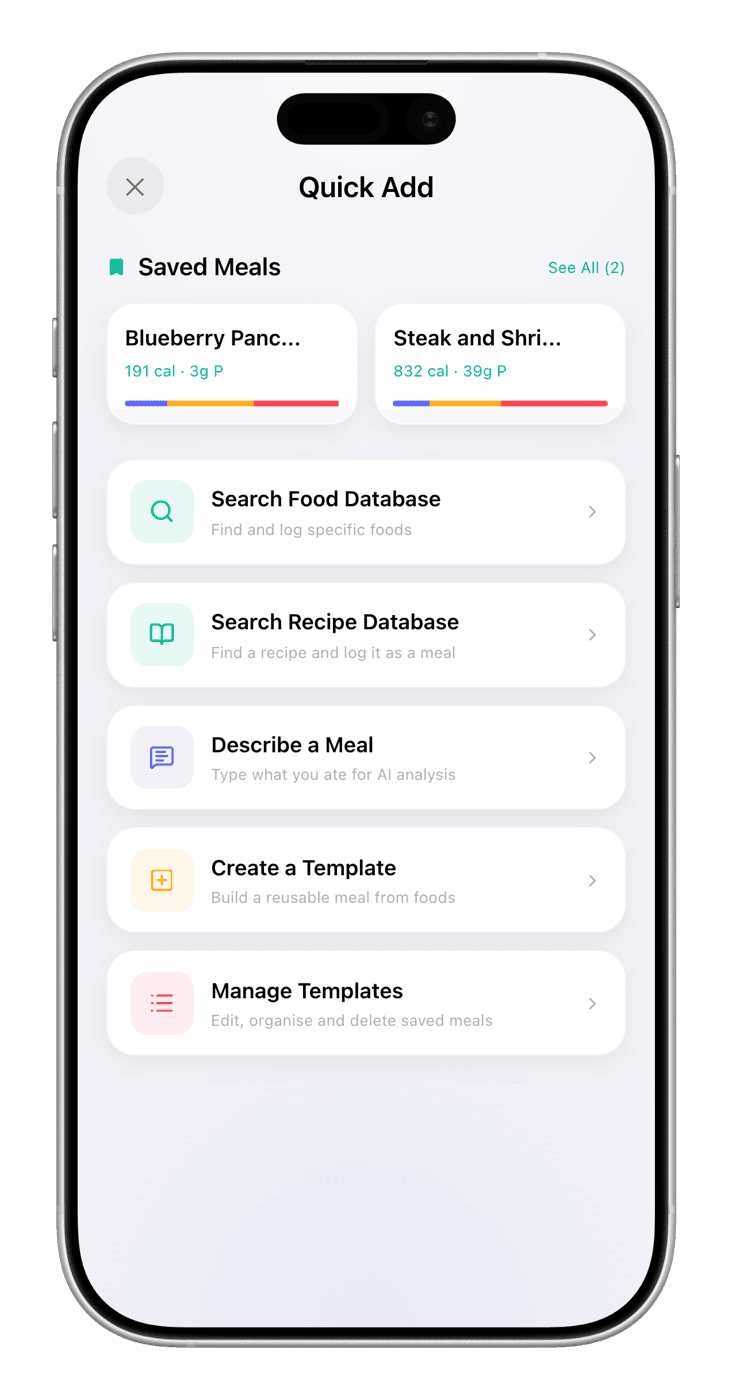
Log the plate, not every bite. Take a quick photo or note of your first plate before you eat, and log it as a few items with rough portions. If you go back for seconds, log a "half plate" rather than trying to itemize again. If you use ProteinLog, a photo or a short voice note of the plate is one way to do this before the dishes are cleared.
-
Log drinks and dessert honestly. Count drinks by size, and log pie by the slice you actually took. These two categories are where most underestimates on holiday meals come from.
-
Reset at the next meal. Friday breakfast is a normal breakfast at your normal targets. Do not try to "pay back" Thursday with a crash day; just return to the routine you know works.
Example day: three ways to handle Thanksgiving
The table below is an example only, showing how the same holiday could look under each approach. It is not a meal plan or a recommendation for your targets, which should come from your own goals and, where relevant, your clinician or dietitian.
| Time | Full tracking (example) | Light tracking (example) | Planned pause (example) |
|---|---|---|---|
| Morning | Pre-log estimated dinner, then a protein-forward breakfast | Protein-forward breakfast, logged as usual | Protein-forward breakfast, logged as usual |
| Midday | Light lunch, logged against what is left | Light lunch, logged as usual | Light lunch, logged as usual |
| Appetizers | Log each item you take | Skip logging, keep to one small plate | Not logged |
| Dinner | Photo of plate, log each dish by portion | One estimated entry for the whole plate | Not logged, protein-first plate |
| Dessert and drinks | Log slice size and each drink | Log one dessert and a drink count | Not logged |
| Next morning | Normal targets | Normal targets | Normal targets and logging resume |
Notice that the last row is the same in all three columns. That is the part that matters most.
What good looks like
A "successful" Thanksgiving for a macro tracker is not hitting your numbers exactly. Some practical signs that it went well:
- You got a solid serving of protein at dinner and probably earlier in the day too.
- You enjoyed the foods you care about without eating the ones you do not.
- Your log shows a realistic estimate, or a planned gap, rather than a blank day you avoid looking at.
- You were back on your routine by Friday breakfast, not on Monday or in January.
- Your weekly average still looks reasonable. Looking at a week instead of a single day puts one big meal in perspective. If you are in a deficit, our calorie deficit explainer shows why the trend over weeks matters more than any one day.
It is also normal for the scale to jump the morning after a big, salty, carb-heavy meal. Much of that early change is usually water and food volume rather than fat, which is why a short-term spike is not a reason to cut drastically.
Mistakes to avoid
Arriving starving. Skipping all food until dinner sounds like it saves room, but it often backfires. Very hungry people tend to fill bigger plates and eat faster, which makes portions harder to judge and harder to log.
Logging nothing because you cannot log perfectly. A home-cooked meal will never be exact. A rough entry still tells you far more than a blank one, and it keeps the habit alive. The point is the habit, not the decimal places.
Logging dishes as their "healthy" base ingredient. Green bean casserole is not green beans, and sweet potato casserole with marshmallows is not a sweet potato. Choosing the plain version is one of the most common ways holiday logs come out too low.
Forgetting the grazing and the drinks. Appetizers, rolls, and refills happen in the background over several hours. If you are tracking fully, log them as you go; if not, set a simple limit in advance, such as one plate of appetizers.
Turning one meal into a long weekend. Leftovers are part of the fun, but four days of pie for breakfast is a different thing from one holiday dinner. Plan leftovers into normal meals instead, such as turkey in a salad or a grain bowl.
Handling leftovers the macro-friendly (and safe) way
Leftover turkey is one of the easiest high-protein foods you will have all year. Portion it into containers soon after the meal so it is ready for lunches. Food-safety agencies recommend refrigerating leftovers within two hours, and within one hour if it is above 90°F. According to the USDA Food Safety and Inspection Service, cooked turkey and cooked dishes keep in the refrigerator for 3 to 4 days, and they can be frozen for longer. The CDC also advises reheating leftovers to at least 165°F.
From a tracking point of view, leftovers are easier than the dinner itself. You are eating known dishes again, so you can log the same entry each time, or save a "Thanksgiving leftovers plate" as a reusable meal so the next three lunches take seconds. Our post on reusable meal templates explains how that habit works day to day.
A note for people with health conditions
The tips here are general and meant for healthy adults who track macros for fitness or weight goals. If you have diabetes, kidney disease, an eating disorder or a history of one, are pregnant, or take medication that affects appetite or blood sugar (including GLP-1 medications), talk to your clinician or a registered dietitian about how to approach holiday meals. If calorie or macro tracking makes you anxious around food, a planned pause from logging is a completely reasonable choice.
How ProteinLog helps
If you want logging to take less effort on a busy day, ProteinLog lets you log a meal by photo or voice, scan barcodes and labels for packaged foods, and save regular meals as templates, with Apple Watch logging and Apple Health sync. It is one option among many; the habits above work with any tracker or even a notebook.
Frequently asked questions
Should I track macros on Thanksgiving at all?
It depends on your goals and how tracking feels for you. Many people do best with a light-touch approach: log a reasonable estimate of the big meal and keep the rest of the day simple. If tracking makes the day stressful, it is fine to skip it for one meal and pick back up the next morning.
How do I estimate Thanksgiving macros when someone else cooked?
Log each dish as the closest generic match in your food database, use hand or plate portions to judge amounts, and add a little extra for butter, gravy, and dressings that you cannot see. A rough, honest estimate is more useful than leaving the meal blank.
How much weight do people actually gain over the holidays?
Less than the popular five-pound figure. A prospective study in the New England Journal of Medicine found an average gain of 0.37 kg (about 0.8 lb) from mid-November to early January, and reviews put typical adult holiday gain at roughly 0.4 to 0.9 kg. The catch is that the gain tended not to come back off afterward.
Should I skip breakfast to save calories for Thanksgiving dinner?
Skipping meals can leave you very hungry by dinner, which often makes portions harder to judge. A protein-forward breakfast or lunch is a common, practical alternative. If you have diabetes, take medication that affects blood sugar, or follow a plan from a clinician, ask them how to handle meal timing on the day.
How do I hit my protein goal on Thanksgiving?
Turkey makes it easier than most holidays. Put a palm-sized portion or more on your plate first, and if your earlier meals of the day include a protein source, you will usually be in a good position by the evening.
How do I log alcohol on Thanksgiving?
Log drinks by size and type, not just by count. A US standard drink holds about 14 grams of pure alcohol, but many holiday pours are larger than a standard drink and mixers add more calories.
What should I do the day after Thanksgiving?
Go back to your normal targets and routine at the next meal. There is no need to compensate with an extreme low-calorie day. Plan your leftovers into regular meals and keep the food-safety timelines in mind.
Can a tracking app make Thanksgiving logging easier?
It can lower the effort. ProteinLog, for example, lets you log a plate by photo or voice and save regular meals as templates, so the rest of the week stays quick. Treat any estimate for a home-cooked holiday plate as a starting point you can adjust.

Ready to Track Smarter, Not Harder?
AI photo logging, verified nutrition data, Apple Watch logging, and our free macro calculator use the same targets as goal setup.
Download on the App StoreiPhone & Apple Watch · No ads · Cancel anytime