On this page
Quick Answer: New to macro tracking? This simple guide explains what macros are, how to calculate them, and how to start tracking for weight loss or muscle gain.
If you're just starting your fitness journey, you've probably heard people talking about "tracking their macros." It might sound complicated, but the concept is quite simple, and it's one of the most effective ways to improve your diet and get the results you want. This guide will break down how to track macros in a simple, step-by-step way. By the end, you'll have a clear understanding of what are macros and how you can start using them to achieve your goals.
What Are Macros, Anyway?
"Macros" is short for macronutrients. These are the three main nutrients that provide your body with energy: protein, carbohydrates, and fats. Each one plays a unique and vital role.
- Protein: The building block of your body. It's essential for repairing tissues, building muscle, and keeping you feeling full.
- Carbohydrates: The body's main source of fuel. They provide the energy you need for your workouts and daily life.
- Fats: Crucial for hormone production, brain health, and absorbing certain vitamins.
While calories determine whether you gain or lose weight, the ratio of these macros determines your body composition - how much of your weight is muscle versus fat. If weight loss is your goal, start by understanding a calorie deficit.
Step 1: Calculate Your Calories and Macros
Before you can track, you need a target. The first step is to figure out how many calories you need each day. You can use a simple online calculator, but the best way is to use a modern nutrition app.
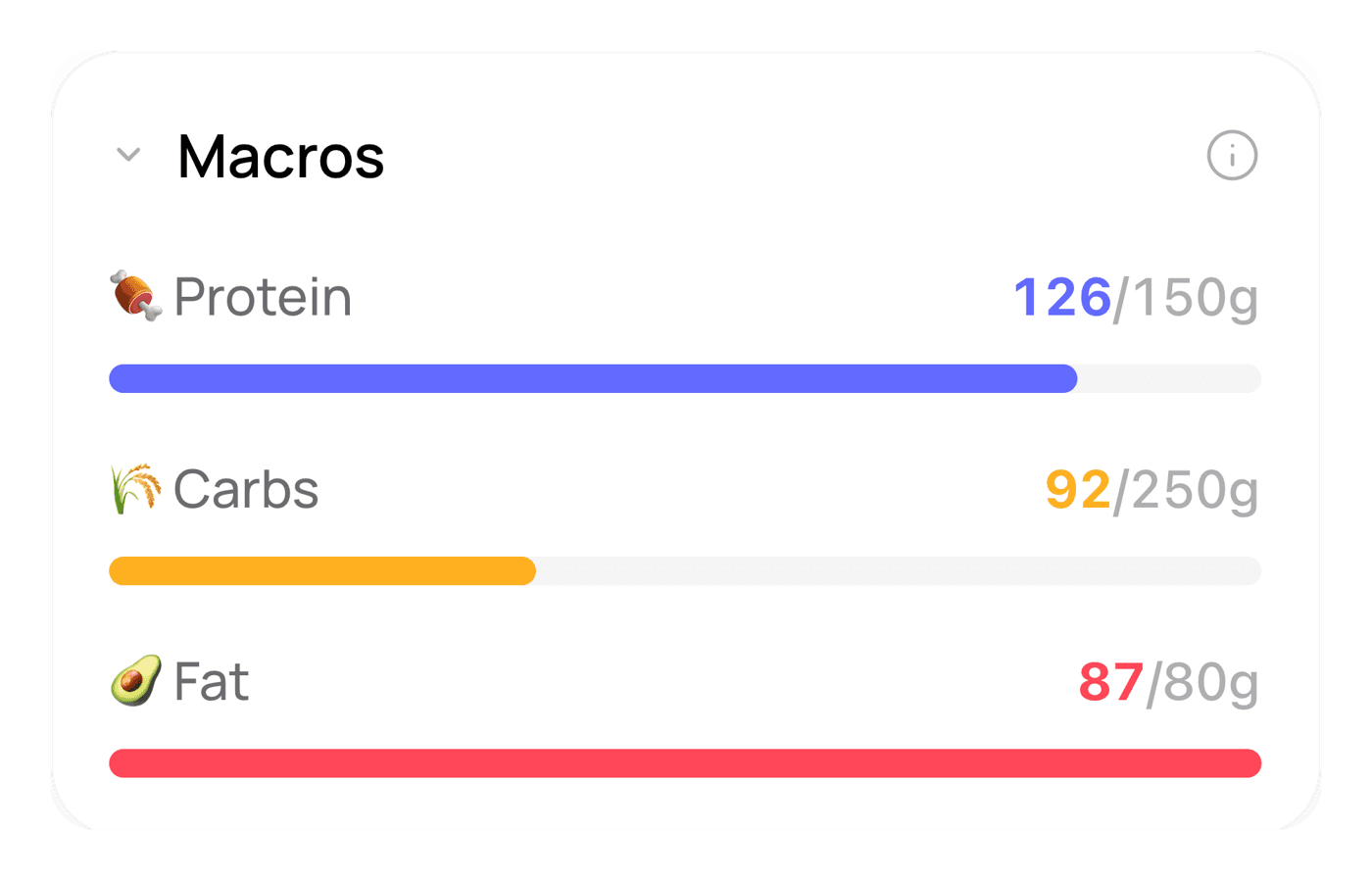
When you sign up for an app like ProteinLog, it will ask for your age, gender, weight, height, activity level, and your primary goal (lose weight, maintain, or gain muscle). Based on this information, it will automatically calculate your macros and give you a daily target for calories, protein, carbs, and fat.
Don't worry about getting these numbers perfect from the start. Think of them as a starting point. You can always adjust them later. If you're on a ketogenic diet, start with our guide to keto macro ratios instead of a standard split.
Step 2: Choose Your Tracking Tool
Consistency is the key to success with macro tracking, and the right tool can make all the difference. While you could use a pen and paper, a macro tracker app makes the process infinitely easier.
Look for an app with a large and accurate food database. A barcode scanner is a must-have for quickly logging packaged foods. And for the ultimate in speed and convenience, an app that lets you track instantly with AI photo logging, like ProteinLog, can be a game-changer. It allows you to log your entire meal just by taking a picture, removing the biggest source of friction in the tracking process.
Step 3: Start Logging Everything You Eat and Drink
Now it's time to start tracking! For the first week, your goal is simply to build the habit. Log everything you consume, from your morning coffee to your late-night snack. Be as accurate as you can.
- For packaged foods: Use the barcode scanner.
- For whole foods: Search for the item in the app (e.g., "apple" or "chicken breast") and specify the quantity.
- For complex meals: This is where AI photo logging shines. If your app has it, just snap a picture. If not, you'll need to log each ingredient individually.
A food scale can be a very helpful tool for learning what portion sizes look like. It's not a long-term requirement, but using one for a couple of weeks can be incredibly educational.
Step 4: Review Your Day and Plan Ahead
At the end of each day, take a look at your macro totals. Are you close to your protein goal? Did you go way over on fats? Don't judge yourself; just observe. This data is your feedback.
As you get the hang of it, you can start planning your meals in advance. For example, if you know you have a dinner party in the evening, you can make lighter food choices earlier in the day to save room in your macro budget. This proactive approach is far less stressful than trying to make everything fit at the last minute.
Step 5: Be Consistent, Not Perfect
This is the most important step. You will have days where you go over your targets. You will have meals that you can't track perfectly. That's completely normal. The goal is not perfection; it's consistency. Aim to hit your macro targets within a reasonable range (e.g., +/- 10 grams) most of the time. One "off" day will not derail your progress. It's what you do consistently over weeks and months that matters.
Frequently Asked Questions
-
Do I need a food scale to track macros? It's highly recommended for the first few weeks. It will teach you to accurately estimate portion sizes, which is a skill you'll use for life. After that, you can rely on your estimations more often.
-
What if I eat at a restaurant? Most chain restaurants have their nutrition information available online and in tracker apps. For local restaurants, do your best to estimate. Search for a similar dish in your app and use that as your guide. It won't be perfect, but it's better than not tracking at all.
-
How long should I track my macros? Think of it as a short-term educational tool. Tracking for a few months can teach you a lifetime of healthy eating habits. Once you have a good intuitive sense of the macro content of your usual foods, you can transition to a more mindful, less data-intensive approach.

Ready to Track Smarter, Not Harder?
AI photo logging, verified nutrition data, Apple Watch logging, and our free macro calculator use the same targets as goal setup.
Download on the App StoreiPhone & Apple Watch · No ads · Cancel anytime