Quick Answer: A voice calorie tracker lets you speak a meal—“chicken bowl with rice, avocado, and a latte”—and turn that description into logged calories and macros in seconds. It is best for speed and hands-busy moments; confirm portions and use barcodes or labels when you need label-level precision.
What is a voice calorie tracker?
A voice calorie tracker is a nutrition app (or a feature inside one) that accepts spoken meal descriptions, parses them into food items and portions, then estimates energy and macronutrients—protein, carbohydrate, and fat.
Instead of typing “chicken,” scrolling results, picking a serving size, and repeating for every ingredient, you talk the way you already think about food. The system typically:
- Transcribes your speech.
- Splits the utterance into foods and modifiers (“extra dressing,” “no cheese,” “half bowl”).
- Maps items to nutrition data or an estimate model.
- Shows a review screen so you can edit before saving.
That last step matters. Voice logging is not magic truth—it is a fast draft of your food diary. Authoritative composition references such as USDA FoodData Central still sit behind many databases and AI estimates. For packaged products, the FDA Nutrition Facts label remains the gold standard for declared calories and protein per labeled serving.
Voice tracking exploded as a product category in 2025–2026. Dedicated apps and landing pages now market speak-to-log flows—examples include Treat’s voice calorie tracker explainer, Logma, VoxFood, and App Store titles such as VoiCal. Independent roundups like Clinical App Report’s 2026 voice-logging ranking test how well mainstream trackers parse compound spoken meals. The takeaway for shoppers: voice is no longer a novelty toggle—it is a primary logging method people actively search for.
Why this matters for people who actually track macros
Food logging only helps if you keep doing it. Classic behavioral research treats dietary self-monitoring as a core habit in weight programs. A systematic review by Burke and colleagues found a consistent association between self-monitoring and weight loss, even while noting methodologic limits in older studies (Europe PMC abstract; Journal of the American Dietetic Association).
More recent evidence points in the same direction:
- A systematic review of dietary self-monitoring in behavioral weight-loss interventions found that both higher- and lower-intensity logging protocols can support weight loss, though adherence definitions vary widely (Public Health Nutrition review).
- A meta-analysis of lifestyle mHealth self-monitoring reported meaningful weight reductions and better adherence versus some non-digital approaches (PMC7400167).
Friction kills streaks. Searching a 14-million-item database while standing in a kitchen with wet hands is friction. So is reconstructing yesterday’s lunch from memory at 10 p.m. A voice calorie tracker attacks those moments: drive-through coffee, post-lift protein shake, “I already ate—just need to get it in the log.”
Voice also pairs naturally with protein-first goals. Sports nutrition guidance from the International Society of Sports Nutrition discusses higher daily protein intakes for many exercising adults (often framed around roughly 1.4–2.0 g/kg/day in that position stand). Hitting those targets is easier when logging is fast enough that you do not skip snacks or liquid calories.
Practically, that means the “boring” logs matter most: the second coffee drink, the bite of a coworker’s pastry, the late yogurt. Those are the entries people skip when logging takes minutes. A voice calorie tracker lowers the activation energy enough that you can capture them while walking back to your desk. Over a month, those recovered entries often explain more about progress than another debate about whether chicken breast was 5 or 6 ounces.
What busy trackers actually need from voice logging
If you are evaluating a voice calorie tracker in 2026, look past the “log in 5 seconds” headline. Ask whether the product helps you finish an accurate-enough day.
Capabilities that matter in real life
| Need | Why it matters | What “good” looks like |
|---|---|---|
| Natural compound utterances | Real meals are multi-item | Parses “eggs, toast, butter, oat latte” into separate foods |
| Portion language | Vague speech is common | Handles “large,” “cup,” “handful,” brand sizes |
| Editable review | Speech errors happen | Easy tap-to-edit grams, items, oils |
| Offline or noisy environments | Gyms and cafés are loud | Clear fallback: type, photo, barcode, or re-record |
| Macro visibility | Protein trackers need P/C/F, not only kcal | Shows protein prominently after save |
| Repeat meals | Most people eat similar breakfasts | Save as template after a good voice log |
| Wrist access | Phone-out logging fails mid-commute | Watch voice or quick-log without unlocking iPhone |
When voice is the wrong tool
- Sealed packaged food with a barcode: Scan it. Labels beat guesses.
- Exact clinical or research logging: Prefer weighed entries and verified databases.
- Ambiguous leftovers: “Some pasta” without size cues will undershoot or overshoot. Add a rough volume (“about 1.5 cups cooked”).
- Shared platters: Speak your portion, not the whole table’s order.
Apple’s own platforms show how voice is spreading across health tasks—Siri can access and log certain Health app data on supported devices, and Apple Watch Siri can help with selected health and fitness requests. That is not the same as a full food diary, which is why dedicated nutrition apps still matter for meal macros. The cultural shift is clear: people expect to speak health data instead of typing it.
Step-by-step: how to use a voice calorie tracker well
1. Set macro targets before you optimize the microphone
Decide what you are tracking: calories only, or protein + carbs + fat. Voice logging shines when you glance at remaining protein after each save. If you are still choosing targets, keep them simple for two weeks, then refine.
2. Speak the meal as a short recipe, not a vibe
Weak: “Healthy lunch.”
Stronger: “Grilled chicken breast, about six ounces, one cup rice, side salad with olive oil, diet soda.”
Include cooking fats. “Chicken” and “chicken sautéed in a tablespoon of oil” are different meals.
3. Name brands and sizes when you know them
“Venti oat milk latte” beats “coffee.” “Quest bar chocolate chip” beats “protein bar.” Brand cues help the model land closer to labeled values—especially when you will later compare against a Nutrition Facts panel.
4. Review before you confirm
Scan three things: item count, protein grams, and any missing sauces or drinks. Fix the draft while the meal is fresh. This is the difference between “AI logging” and “AI guessing into your diary.”
5. Save repeats as templates
Once a spoken breakfast is clean, turn it into a reusable meal. Next time you need one tap, not another monologue. Pair this with our guide to reusable meal templates for daily macro tracking.
6. Choose the right method per food, not one method for everything
Use voice for mixed plates and restaurant orders, barcodes for packaged snacks, and photo logging when the plate is in front of you and hard to describe. For photo workflows, see AI photo calorie counters and how accurate AI photo counters are.
7. Log from the wrist when your hands are full
If your app supports Apple Watch meal logging, practice one gym workflow: finish the set → speak the shake → confirm. Standalone watch logging is covered in depth in How to set up standalone meal logging on Apple Watch and on the Apple Watch product page.
Voice vs photo vs barcode vs search: pick the fastest accurate path
| Method | Typical best use | Strength | Limitation | | --- | --- | --- | | Voice | Mixed meals, retroactive logging, hands busy | Fast, natural language, works without seeing the plate | Depends on what you remember/say; portions are estimates | | Photo AI | Restaurant plates, home meals in view | Captures visual portion cues | Lighting, mixed bowls, and sauces can confuse models | | Barcode | Packaged grocery items | Often closest to labeled values | Useless for unlabeled restaurant food | | Manual search | Exact branded entries you already know | Full control | Slow; easy to abandon mid-day |
Category marketing often claims voice takes ~10 seconds and database search takes minutes (see competitor explainers such as Treat). Treat those timings as directional, not universal. Your real benchmark is: Did I finish today’s log without dread?
Independent testers also note that voice NLP quality varies by app—compound utterances are harder than single foods (Clinical App Report 2026). If your tracker mishandles “two eggs and toast with butter,” keep a text fallback.
What good voice logging looks like after 14 days
You are doing it right when:
- Missed meals drop. Lunch is logged the same day more often than not.
- Protein visibility improves. You catch low-protein days before dinner.
- Edits get smaller. Your first draft needs fewer corrections because your phrasing improved.
- You mix methods deliberately. Barcodes for bars; voice for bowls; templates for repeats.
- Weekends still get logged. Speed tools matter most when routines break.
Good does not mean every gram matches a lab assay. Even labeled values follow rounding rules and serving-size conventions described in FDA materials. Aim for consistent directional accuracy—especially on protein and calorie totals across the whole day.
Phrase bank you can copy
| Situation | Say something like… |
|---|---|
| Breakfast | “Two large eggs scrambled in one teaspoon butter, two slices whole wheat toast, black coffee” |
| Protein shake | “One scoop whey in 300 milliliters of oat milk” |
| Takeout bowl | “Chipotle-style chicken bowl with rice, beans, salsa, no cheese, half guacamole” |
| Late log | “Yesterday’s dinner: salmon fillet about 180 grams, roasted potatoes one cup, broccoli, olive oil drizzle” |
| Snack | “Greek yogurt 170 grams, handful of blueberries, teaspoon of honey” |
Mistakes to avoid with a voice calorie tracker
1. Treating the first transcript as final
Speech-to-text will invent brands or miss “oil.” If you never edit, your diary drifts. Consequence: mysterious stalls on the scale while your log looks “perfect.”
2. Forgetting liquids and toppings
Lattes, cooking sprays, peanut butter “just a spoon,” and dressings are classic under-logs. Speak them every time.
3. Using voice for everything packaged
If the box is in your hand, prefer barcode or label capture. Voice estimates of a branded cereal are slower and less precise than scanning.
4. Speaking goals instead of foods
“High protein dinner” does not log macros. Name the foods.
5. Ignoring noisy environments without a fallback
Gyms wreck microphones. If the parse is garbage, switch to a template or type one line rather than saving a wrong meal.
How to build a hybrid logging system (recommended)
Think in layers:
- Templates for meals you eat ≥3× per week.
- Voice for everything else you can describe in one breath.
- Photo when description is hard but the plate is visible.
- Barcode / label for packaged precision.
- Weekly review of average protein and calorie totals—not single-meal perfection.
This hybrid approach matches how people actually eat. It also respects what the evidence says about self-monitoring: consistency beats ornate precision that you abandon by Thursday (Burke review; mHealth meta-analysis).
Composition literacy helps too. When an estimate looks off, sanity-check against FoodData Central or the package label rather than arguing with the microphone.
Privacy, permissions, and realistic expectations
Voice logging usually needs a microphone permission and a network connection for speech recognition or AI parsing (exact behavior varies by app). Before you commit to a tracker, skim its privacy policy for how audio is handled—some products say audio is processed and discarded; others may retain transcripts for support or model improvement. Prefer apps that make review-and-edit mandatory so a bad transcription never silently becomes “truth” in your history.
Also set expectations:
- Voice is an estimate pipeline, not a lab assay.
- Labeled packaged foods should still lean on barcodes or Nutrition Facts panels when available (FDA guidance).
- Apple system voice features for Health data (Apple Newsroom) are complementary context, not a replacement for a dedicated macro diary.
- Independent rankings can help you compare NLP quality across brands (Clinical App Report), but your own two-week adherence test matters more than a leaderboard score.
If you coach clients or share screenshots with a dietitian, export or summarize weekly averages rather than obsessing over a single spoken lunch. Consistency across seven days beats a perfect Monday.
How to troubleshoot bad voice parses (quick checklist)
- Re-speak once with quantities before editing by hand—“one cup,” “two tablespoons,” “six ounces.”
- Split mega-meals into two utterances if the parser drops the last items.
- Fix oils and sauces first—they move calories more than swapping rice varieties.
- Confirm protein on the review screen; if it looks impossibly high or low for the plate you ate, an item was mis-sized.
- Fall back to photo, barcode, or a saved template instead of forcing a noisy gym recording to “count.”
These habits turn voice from a gimmick into a reliable speed layer inside a broader logging system instead of a one-button replacement for every meal.
How ProteinLog helps
ProteinLog supports speaking a meal when your hands are full, alongside photo logging, meal templates, barcode and label scanning, and Apple Watch logging—so voice stays a speed layer you still review before you trust the protein total.
Frequently asked questions
What is a voice calorie tracker?
A voice calorie tracker lets you describe a meal out loud so the app can identify foods, estimate portions, and log calories plus macros—without searching a database item by item.
How accurate is voice food logging compared with barcode scanning?
Barcode and Nutrition Facts label data are usually the most precise for packaged foods because they come from labeled values (FDA label guidance). Voice logging is an estimate based on what you say, so clarity and portion language matter. Use voice for speed on mixed meals, then switch to label or barcode when the package is in front of you.
Can I use a voice calorie tracker for restaurant meals?
Yes. Voice works well when you can name the dish and modifiers—extra sauce, no cheese, half portion. Pair it with a quick review of the logged items. For plated meals you can photograph, AI photo logging is another option.
Does voice logging work on Apple Watch?
It depends on the app. Some nutrition apps support spoken meal logging from the wrist so you do not need to pull out your phone. Always confirm the watch app can actually save a food entry—not only open a glance.
What should I say for better voice macro tracking?
Include quantity, cooking method, and brand when you know them. Say “two large scrambled eggs with buttered toast” instead of “eggs and toast.” Add oils, dressings, and drinks—those are the items people forget most often.
Is voice logging better than typing every food?
For adherence, faster logging usually wins. Research on dietary self-monitoring links more consistent tracking with better weight outcomes (Burke et al.). Voice is one way to cut friction; meal templates and barcodes are others. Use the method you will actually finish.
How do I start with ProteinLog voice logging?
Describe the meal the way you would tell a friend, review the items and macros, then save. On busy days, combine voice with saved meal templates and Apple Watch quick logging so you are not stuck searching a database mid-workout. A free 7-day trial is listed publicly on proteinlog.com.
Continue reading
Related guides
8 min read
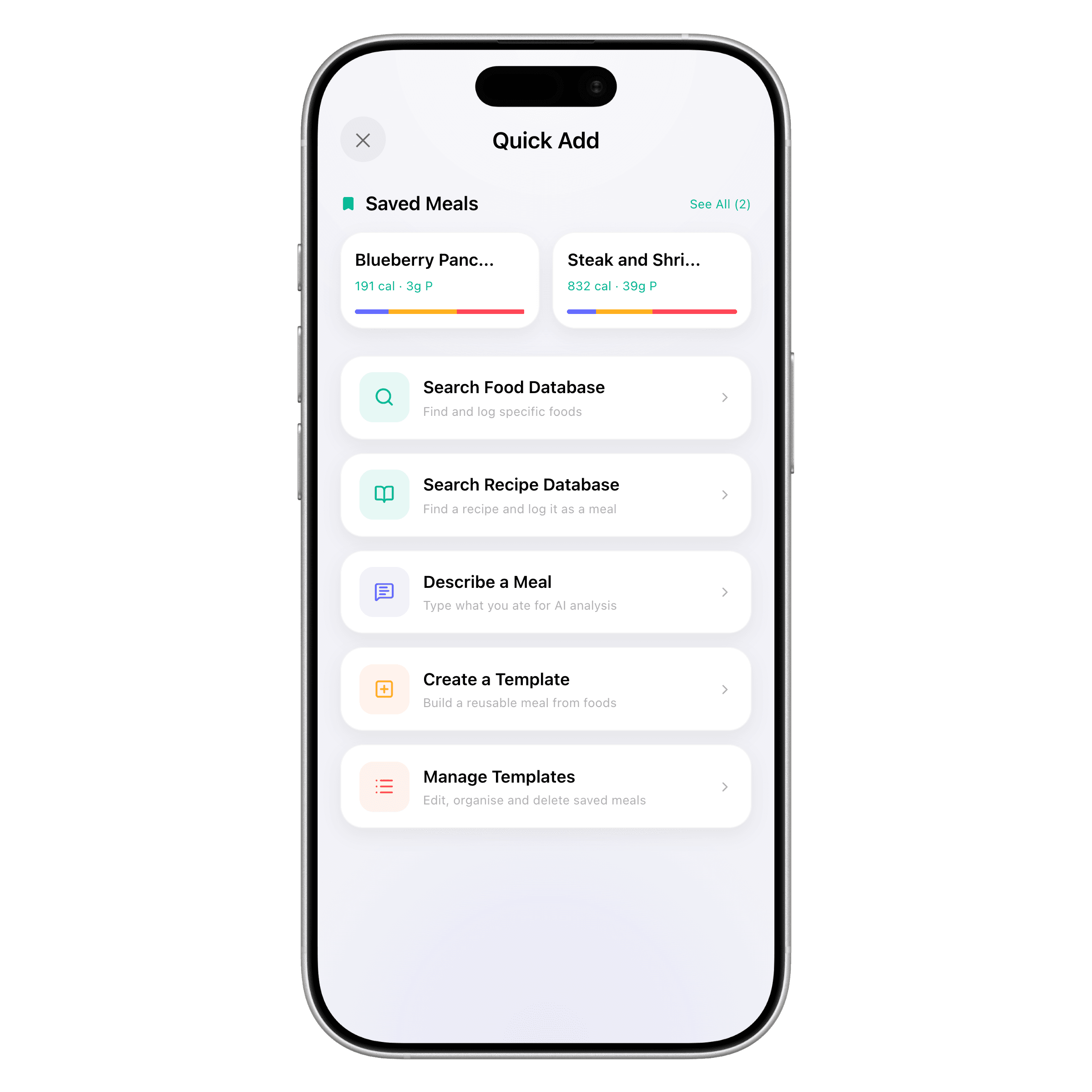
How to Create Reusable Meal Templates for Daily Macro Tracking
Learn how to create reusable meal templates for daily tracking. Save repeat meals, one-tap log from iPhone or Apple Watch, and hit your macros faster.

8 min read
How to Log Restaurant Meals and Estimate Portions with Photo Logging
Learn how to log restaurant meals and estimate portions with photo logging. Use menu data, hand portions, and AI to track dining out accurately.
4 min read
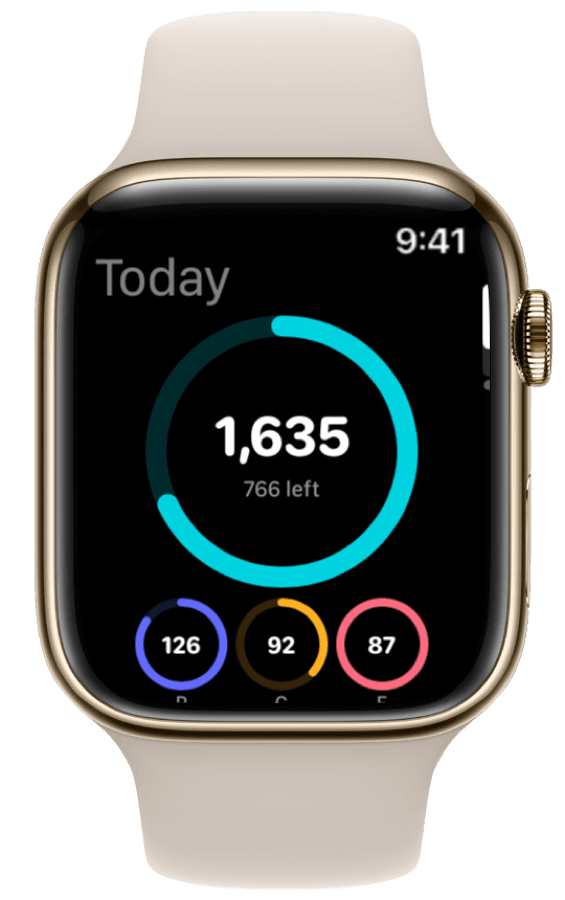
How to Track Calories & Macros on Apple Watch in 2026 (The Complete Guide)
The complete Apple Watch calorie tracker guide for 2026. Compare apps, set up watch face widgets, voice logging, Action Button shortcuts, and Apple Health sync.
Ready to Track Smarter, Not Harder?
Try ProteinLog free for 7 days. AI photo logging, verified nutrition data, Apple Watch logging, and our free macro calculator use the same targets as goal setup.
Download on the App Store