How Much Protein Do You Actually Need Per Day? (Science-Backed Answer)
If you have ever searched "how much protein per day," you have likely been met with a confusing array of numbers. The government tells you one thing, your personal trainer tells you another, and fitness influencers seem to recommend eating your body weight in chicken breast.
The truth is, your optimal protein intake depends entirely on your goals. Whether you want to lose weight, build muscle, or simply maintain your health as you age, protein is the most critical macronutrient you can track.
In this guide, we will break down the exact science of how much protein you need per day and show you the easiest way to track it.
The Confusion Around the RDA
The Recommended Dietary Allowance (RDA) for protein is 0.8 grams per kilogram of body weight (or about 0.36 grams per pound) [1].
For a 75kg (165 lb) adult, that equals just 60 grams of protein per day.
However, there is a massive misconception about this number. The RDA is not the optimal amount of protein you should eat to thrive. It is the minimum amount required to prevent a nutritional deficiency [2]. If you are active, trying to lose weight, or trying to build muscle, eating only the RDA will hold you back.
How Much Protein for Weight Loss?
When you are in a calorie deficit to lose weight, protein becomes your best friend for three reasons:
- It preserves muscle: When you lose weight, you want to lose fat, not muscle. A high protein intake signals your body to hold onto lean tissue even when calories are restricted.
- It keeps you full: Protein is the most satiating macronutrient. It reduces levels of the hunger hormone ghrelin and boosts peptide YY, which makes you feel full [3].
- It burns more calories: The Thermic Effect of Food (TEF) is the energy your body uses to digest food. Your body burns 20-30% of the calories in protein just to digest it, compared to only 5-10% for carbs and 0-3% for fats.
The Target: For weight loss, aim for 1.6 to 2.2 grams of protein per kilogram of body weight (0.7 to 1.0 grams per pound).
How Much Protein to Build Muscle?
To build muscle (hypertrophy), your body needs to be in a state of positive nitrogen balance. This means you must consume more protein than your body breaks down during exercise.
While old-school bodybuilding lore suggested you needed upwards of 3 grams per kilogram, modern sports science has found the sweet spot. Research consistently shows that muscle protein synthesis maxes out around 1.6 to 2.2g/kg [4]. Eating more than this won't necessarily hurt you, but it won't build extra muscle either - those calories would be better spent on carbohydrates to fuel your workouts.
The Target: To build muscle, aim for 1.6 to 2.2 grams of protein per kilogram of body weight (0.7 to 1.0 grams per pound).
High-Protein Food Sources
Hitting a target of 150g+ of protein per day can seem daunting at first. The key is to include a solid protein source in every meal. Here is a quick reference guide to some of the most efficient protein sources:
| Food Source | Serving Size | Protein (g) | Calories |
|---|---|---|---|
| Chicken Breast (Cooked) | 100g (3.5 oz) | 31g | 165 |
| Greek Yogurt (Non-fat) | 170g (6 oz) | 17g | 100 |
| Canned Tuna (in water) | 1 can (165g) | 42g | 190 |
| Eggs | 2 large | 12g | 140 |
| Whey Protein Isolate | 1 scoop (30g) | 25g | 110 |
| Firm Tofu | 100g (3.5 oz) | 17g | 144 |
| Lentils (Cooked) | 1 cup (198g) | 18g | 230 |
The Tracking Problem: Why Most People Undereat Protein
Knowing how much protein you need is only half the battle. The reality is that most people consistently undereat protein because they try to estimate their portions by eye.
Is that chicken breast 100g or 200g? Did that smoothie have 15g or 30g of protein? Without accurate tracking, it is almost impossible to hit your goals consistently.
However, traditional macro tracker apps are tedious. Weighing every ingredient and searching databases for "chicken breast cooked no oil" takes time that most people simply don't have. Using a dedicated protein tracker app removes that friction.
The Solution: Track Protein in Seconds
This is exactly why we built ProteinLog.
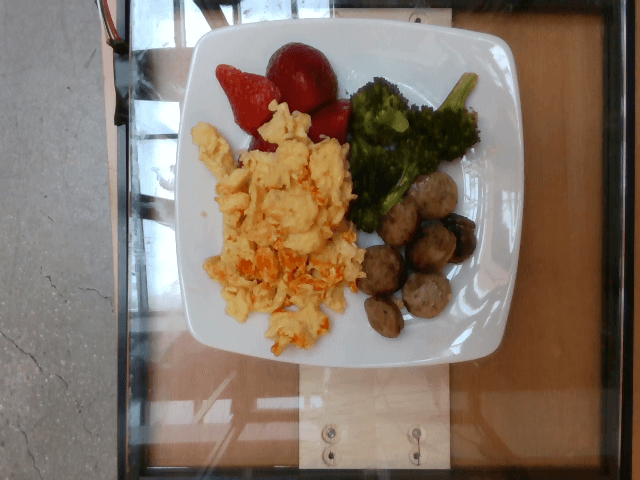
Instead of typing and searching, ProteinLog uses advanced AI to track your macros instantly. Just point your camera at your meal, and the AI identifies the food, estimates the portion size, and calculates your exact protein, carb, and fat intake using verified USDA and FatSecret databases.
You can even use Voice Logging. Just say, "I had a bowl of oats with a scoop of whey protein and a banana," and it is logged in under five seconds.
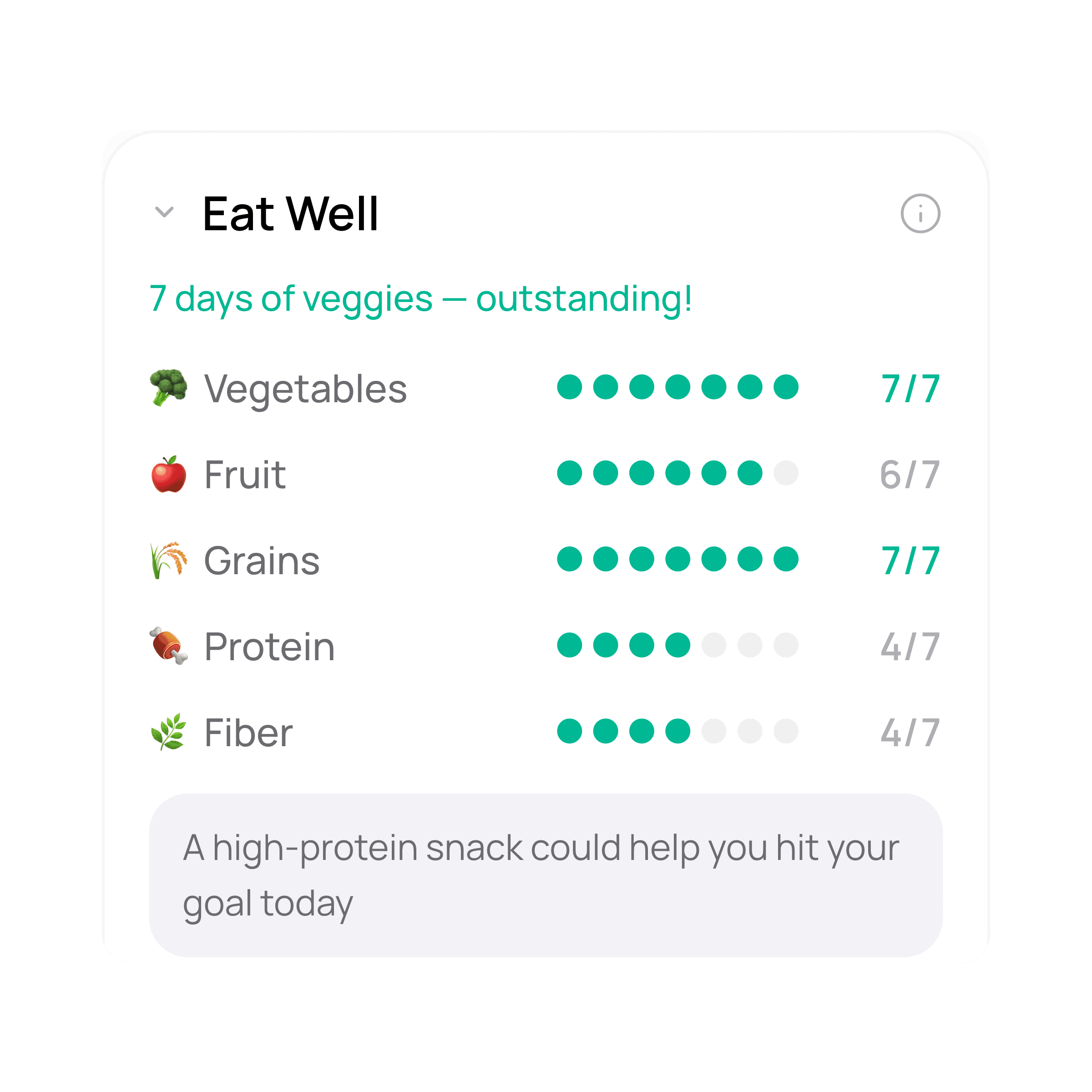
ProteinLog also features an Eat Well Score, ensuring that you aren't just hitting your protein numbers with processed shakes, but actually getting your nutrients from whole, quality foods.
Stop guessing your protein intake. Snap a photo of your next meal and let ProteinLog calculate it in seconds.
Download ProteinLog on the App Store today for a free 7-day trial.
References
[1] Harvard Health Publishing. "How much protein do you need every day?" (2023). [2] UCLA Health. "How much protein do you really need?" (2025). [3] Clinical Evidence and Mechanisms of High-Protein Diet. PMC7539343 (2020). [4] Systematic review and meta-analysis of protein intake to support muscle mass. PMC8978023.
Continue reading
Related guides
4 min read
20 Best High-Protein, Low-Calorie Foods for Weight Loss
Discover the top 20 high-protein, low-calorie foods that keep you full, build muscle, and make weight loss easier. Includes macro breakdowns.
11 min read
Voice Calorie Tracker Guide 2026: Log Macros by Speaking
Use a voice calorie tracker to log meals faster—phrase tips, accuracy checks, method comparison, and Apple Watch workflows.
4 min read
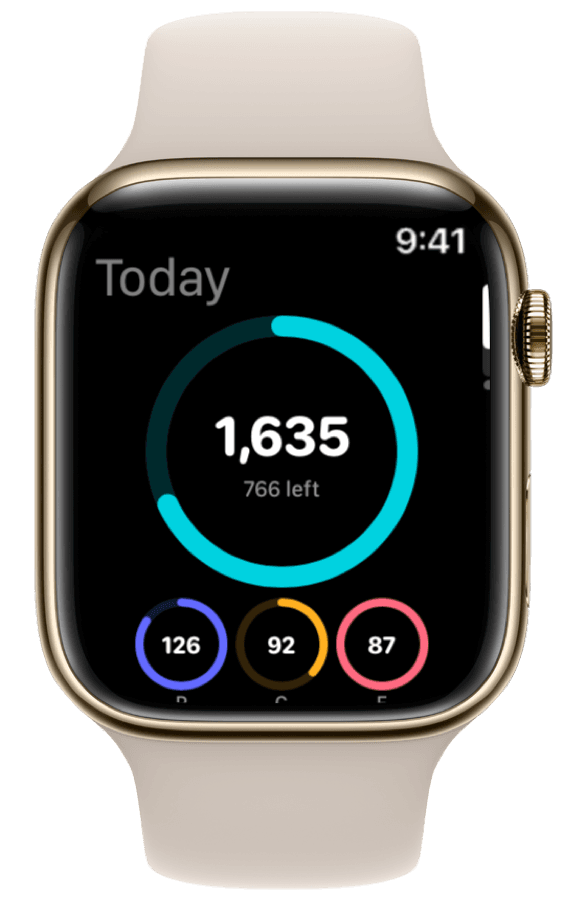
How to Track Calories & Macros on Apple Watch in 2026 (The Complete Guide)
The complete Apple Watch calorie tracker guide for 2026. Compare apps, set up watch face widgets, voice logging, Action Button shortcuts, and Apple Health sync.
Ready to Track Smarter, Not Harder?
Try ProteinLog free for 7 days. AI photo logging, verified nutrition data, Apple Watch logging, and our free macro calculator use the same targets as goal setup.
Download on the App Store