On this page
Quick Answer: For high-protein meal prep, pick one protein you like, add a grain or starchy side and vegetables, and pack the sauce separately. Start with a few work lunches. Log the whole batch once, then divide it by equal servings or weigh individual portions if the containers aren’t the same size.
Pick a lunch you’ll want to eat at work
Start with the lunch break you actually have. If there’s no microwave, make something you like cold, such as a lentil salad or a tuna and white bean wrap. If you do have a microwave, a rice bowl works well: heat the cooked components and add the crunchy toppings afterward.
Pick the protein before you shop, then build around it. You can share the same grain and vegetables across two lunches without eating the same thing twice. If you’re new to estimating protein, use the protein tracking guide to get comfortable reading labels and choosing food entries.
| Work lunch | What to pack | Prep shortcut |
|---|---|---|
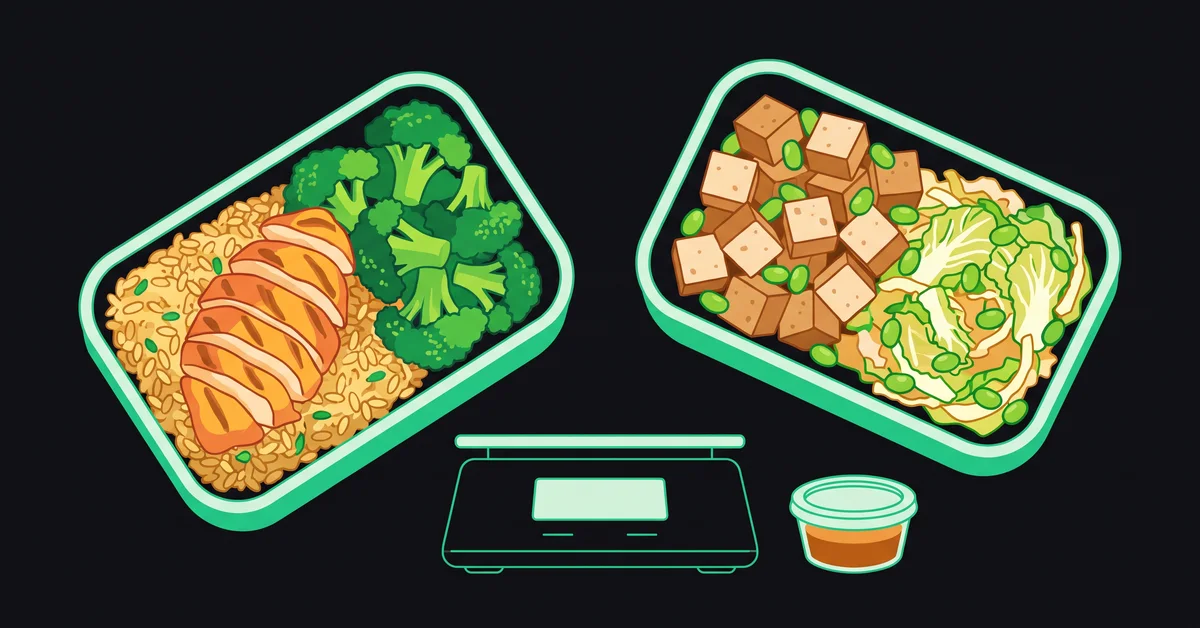
| Lemon chicken rice bowl | Chicken breast, rice, broccoli, lemon-yogurt sauce | Roast the chicken and broccoli, then portion them over rice. Pack the sauce in a cup. |
| Tofu and edamame bowl | Firm tofu, shelled edamame, rice, shredded cabbage, ginger dressing | Bake the tofu, prepare the edamame as directed, and keep the cabbage separate until lunch. |
| Tuna and white bean wrap | Drained tuna, white beans, lemon, plain yogurt, and a tortilla | Mash some beans into the filling. Pack the tortilla separately and assemble it at lunch. |
| Lentil and feta salad | Cooked lentils, feta, cucumbers, tomatoes, and a whole-grain side | Portion the lentils and feta first. Add the chopped vegetables and dressing before eating. |
| Turkey and bean chili | Ground turkey, beans, tomatoes, and a side you like | Stir the pot before dividing it. Freeze suitable portions you won’t eat within the recommended fridge window. |
Prep, portion, and pack in six steps
- Choose two lunch variations. Start with one base and change a topping or sauce. A cabbage-and-rice base can take lemon chicken one day and ginger tofu the next. Check whether you’ll have a fridge and microwave before choosing.
- Write down what goes into the batch. Record the amounts you use while the packages and scale are out. Use the Nutrition Facts label for packaged ingredients and USDA FoodData Central for foods without a label. Match raw weights with raw entries and cooked weights with cooked entries. Note the sauce, oil, or cheese separately if they aren’t divided evenly.
- Cook and chill what you’ll pack. Keep raw poultry and its utensils separate from produce and cooked food, as explained in the four steps to food safety. Portion cooked food into shallow containers and refrigerate promptly rather than leaving a large batch out to cool. Check the storage chart for the dish you made.
- Divide the batch by how you serve it. If you made four equal bowls, use one quarter of the recipe for each bowl. If the containers differ in size, weigh the finished batch and the portion you pack. When ingredients stay separate, such as pieces of chicken laid over rice, weigh or divide the components individually rather than assuming the chicken is spread evenly.
- Keep the extras separate. Pack dressing or crunchy ingredients in a small container. That keeps your lunch from getting soggy and makes it easier to account for a different topping. Label containers with the prep date so you don’t have to remember which one you cooked first.
- Keep perishables cold on the commute. The USDA packed-lunch guide recommends an insulated bag with at least two cold sources for perishable food and refrigeration on arrival if available. If you reheat leftovers, follow the government temperature chart.
How to log a homemade batch without weighing it at lunch
Say your ingredient entries add up to 120 g of protein and your finished, mixed batch weighs 1,000 g. These are example numbers to show the math, not nutrition values for a specific recipe. A 250 g container is one quarter of the batch, so the estimate is 30 g of protein; a 300 g container is three tenths, or 36 g.
Use the same share for any other nutrient you’ve totaled. Subtract the empty container’s weight, and stir before portioning a mixed dish such as chili. The math doesn’t make a rough ingredient entry more precise, and it won’t account for an extra piece of chicken in one bowl. For separate components, build the serving from the amounts you actually packed.
Once you know your usual portion, save what repeats and log swaps separately. The meal-template guide shows how to reuse a meal instead of looking up its ingredients every day.
Three meal prep mistakes to avoid
- Logging a cooked weight against a raw entry. Cooking can change the food’s weight. Matching the entry to what you weighed makes the estimate easier to repeat.
- Assuming five lunches will all keep until Friday. FoodSafety.gov’s storage chart gives cooked meat and poultry leftovers three to four days at 40°F or colder. Freeze suitable later portions or prep a second batch instead of treating one fridge window as universal.
- Saving the entire batch as one lunch. Keep the recipe total and the serving amount separate. If you pack a bigger portion or add sauce, adjust that day’s log rather than changing every future lunch.
How ProteinLog helps
ProteinLog tracks protein and macros on iPhone and Apple Watch. Use a saved meal template for a lunch you make regularly, then adjust the entry when the portion or ingredients change. Find ProteinLog on the App Store.
FAQ
What is an easy high-protein lunch to meal prep?
Try a chicken, rice, and broccoli bowl, or combine tofu and edamame with cabbage and rice. Pack the sauce separately so you can add it at lunch.
Can I meal prep high-protein lunches without meat?
Yes. Start with tofu, tempeh, beans, or lentils. Pair tofu with edamame or mix lentils into a grain salad, then use the package label or a matching database entry if you want to estimate protein.
Should I weigh food raw or cooked?
Either works if the food entry matches the state you weigh. For batch logging, you can use raw ingredient values for the recipe and weigh the finished batch to estimate the share in each container.
How long can meal-prepped lunches stay in the fridge?
FoodSafety.gov lists three to four days at 40°F or colder for cooked meat or poultry leftovers and for soups and stews. Check the guidance for your dish and freeze suitable later portions rather than assuming every lunch will keep for a full workweek.
How do I log a lunch if I change the sauce or sides?
Keep the saved entry for the portion that stayed the same. Log the new sauce or side separately, or update the saved meal if the change will be your new usual.
Sources

Ready to Track Smarter, Not Harder?
AI photo logging, verified nutrition data, Apple Watch logging, and our free macro calculator use the same targets as goal setup.
Download on the App StoreiPhone & Apple Watch · No ads · Cancel anytime