On this page
Quick Answer: Use TDEE − ~500 kcal for a sustainable deficit, set protein (~1 g/lb goal weight), allocate ~25–30% calories to fat, then fill carbs — our web calculator mirrors ProteinLog onboarding.
If you want to lose weight, counting calories is effective. However, if you want to lose fat while maintaining muscle, feeling full, and keeping your energy levels high, you need to count macros.
"Macros" is short for macronutrients: the three main categories of nutrients that provide your body with energy. They are protein, carbohydrates, and fat.
Calculating your macros can seem complicated at first, with formulas and percentages, but it is actually a straightforward process once you break it down. In this guide, we will walk you through exactly how to calculate your macros for weight loss in four simple steps.
Step 1: Calculate Your Maintenance Calories (TDEE)
Before you can figure out how much you should eat to lose weight, you need to know how much you burn just by existing and moving around. This is called your Total Daily Energy Expenditure (TDEE), or your "maintenance calories."
Your TDEE is made up of two parts:
- Basal Metabolic Rate (BMR): The calories your body burns at rest to keep your organs functioning (breathing, pumping blood, etc.).
- Activity Multiplier: The additional calories you burn through daily movement and exercise.
How to Find Your TDEE
You can calculate this manually using the Mifflin-St Jeor equation, but the easiest and most accurate method is to use a reliable online tool.
Action Step: Go to our Free Macro Calculator. Enter your age, gender, height, weight, and activity level.
Be honest about your activity level. Most people overestimate how active they are. If you work a desk job and work out for 45 minutes a day, you are "Lightly Active," not "Highly Active."
The calculator will give you a number. Let's say your TDEE is 2,500 calories per day. If you eat 2,500 calories, your weight will stay exactly the same.
Step 2: Set Your Calorie Deficit
To lose weight, you must consume fewer calories than your TDEE. This is called a calorie deficit.
A safe, sustainable rate of weight loss is about 1 pound (0.45 kg) per week. Since one pound of fat contains roughly 3,500 calories, you need a deficit of 500 calories per day (500 x 7 days = 3,500).
- Your TDEE: 2,500 calories
- Your Deficit: - 500 calories
- Your Daily Calorie Target: 2,000 calories
Action Step: Subtract 500 from your TDEE. This is your new daily calorie goal.
Step 3: Calculate Your Macros
Now that you have your total calorie target (2,000 calories), you need to divide those calories into protein, fat, and carbohydrates.
It is important to know how many calories are in each gram of a macronutrient:
- Protein: 4 calories per gram
- Carbohydrates: 4 calories per gram
- Fat: 9 calories per gram
1. Set Your Protein Target
Protein is the most important macro for weight loss. It keeps you full (satiety), preserves your muscle mass while you lose fat, and burns more calories during digestion than carbs or fat.
A standard, highly effective rule is to eat 1 gram of protein per pound of your goal body weight (or roughly 2.2 grams per kg).
- Example: If your goal weight is 160 lbs, your protein target is 160 grams per day.
- Calorie Math: 160g x 4 calories = 640 calories from protein.
2. Set Your Fat Target
Dietary fat is essential for hormone production and overall health. A safe minimum is to allocate 25% to 30% of your total daily calories to fat.
Let's use 25% of our 2,000 calorie target.
- Calorie Math: 2,000 x 0.25 = 500 calories from fat.
- Gram Math: 500 calories / 9 calories per gram = 55 grams of fat.
3. Set Your Carbohydrate Target
Carbohydrates are your body's preferred energy source, especially for workouts. The remainder of your calories will come from carbs.
First, add up the calories you have already allocated to protein and fat:
- Protein: 640 calories
- Fat: 500 calories
- Total so far: 1,140 calories
Now, subtract that from your total daily goal:
- 2,000 total calories - 1,140 calories = 860 calories remaining.
Finally, convert those remaining calories into grams of carbs:
- Gram Math: 860 calories / 4 calories per gram = 215 grams of carbs.
Your Final Macro Split:
- Calories: 2,000
- Protein: 160g
- Fat: 55g
- Carbs: 215g
Step 4: Track Your Intake
You now have your targets. The final step is to track what you eat to ensure you are actually hitting them.
This is where most people fail. Manually weighing food, searching databases, and doing math for every meal is exhausting. If tracking takes too much time, you will quit.
To stay consistent, you need a tool that removes the friction of data entry.
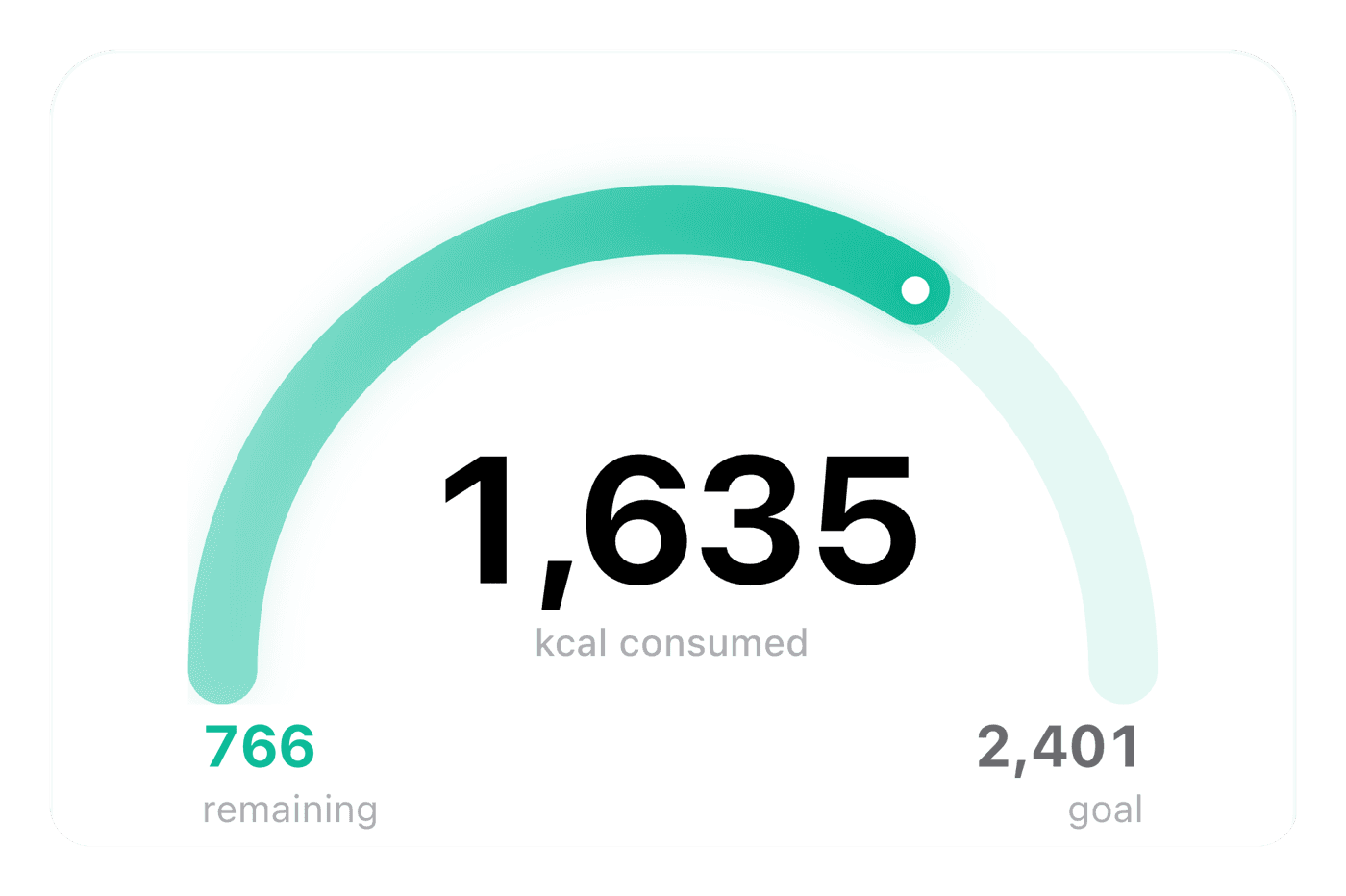
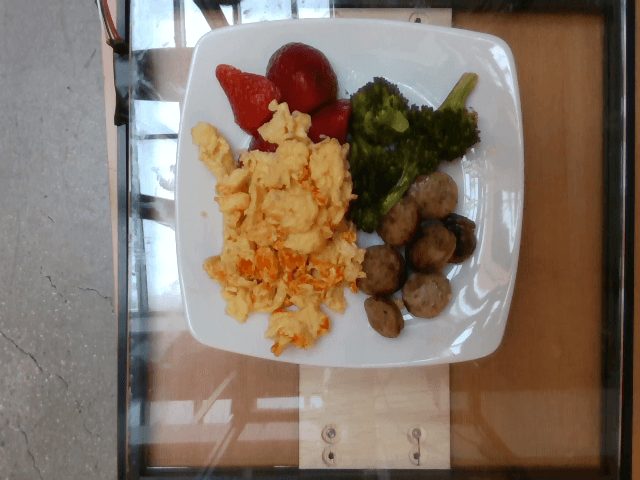
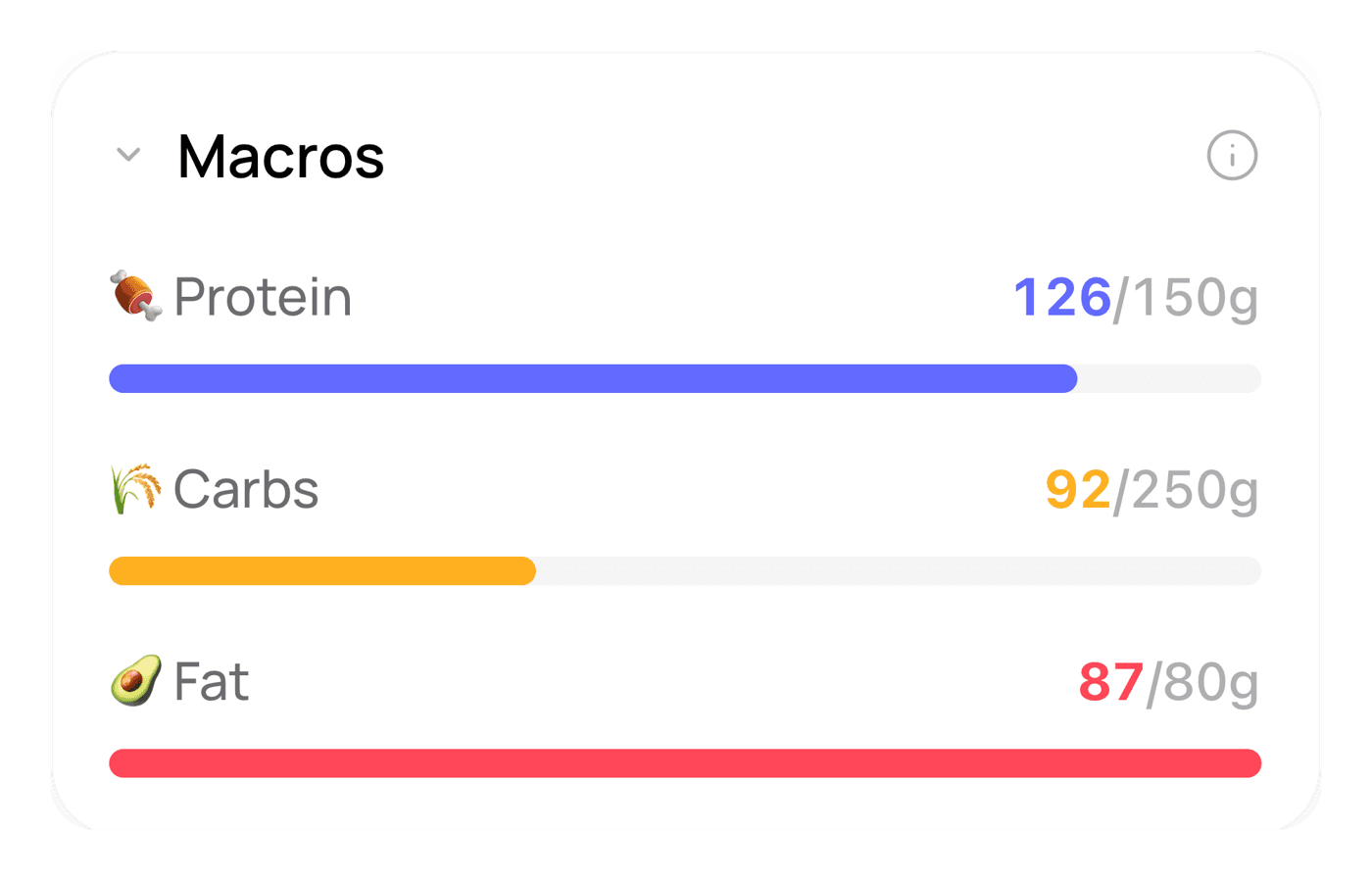
ProteinLog is an AI-powered macro tracking app that logs your meals in seconds. Instead of searching a database for "chicken breast" and "white rice," you simply snap a photo of your plate. The AI identifies the food, estimates the portions, and instantly calculates your protein, carbs, and fat.
If you are serious about hitting the macro targets you just calculated, you need a tracker that works at the speed of your life.

Ready to Track Smarter, Not Harder?
AI photo logging, verified nutrition data, Apple Watch logging, and our free macro calculator use the same targets as goal setup.
Download on the App StoreiPhone & Apple Watch · No ads · Cancel anytime