On this page
Quick Answer: AI calorie trackers promise to make food logging faster and easier with photo and voice recognition. We explore how they work and if they live up to the hype.
For years, the promise of a truly effortless food diary has felt just out of reach. We've dutifully scanned barcodes, searched through endless databases, and manually entered ingredients, all in the name of better health. But the process has always been tedious and time-consuming. That is, until now. The rise of the AI calorie tracker is set to revolutionize the way we think about nutrition, and in 2026, this technology is finally coming of age.
These new "smart" trackers are leveraging the power of artificial intelligence to automate the most painful parts of food logging. But what exactly is an AI calorie tracker, how does it work, and is it finally time to ditch the manual methods for good?
The Problem with Manual Food Logging
To appreciate the innovation of AI, we first have to acknowledge the friction of the past. The number one reason people give up on tracking their food is the sheer effort involved. A single home-cooked meal can involve searching for half a dozen ingredients, estimating their weight, and logging them one by one. It's a process that can take 5-10 minutes, multiple times a day. This friction adds up, and for many, it becomes a barrier to consistency. When tracking feels like a chore, it's the first thing to go when life gets busy.
The Promise of AI: Photo, Voice, and Predictive Logging
An AI calorie tracker aims to eliminate this friction by using machine learning to do the heavy lifting. Instead of you searching for food, the app recognizes it for you. This technology manifests in a few magical ways.
Snap a Photo, Log a Meal
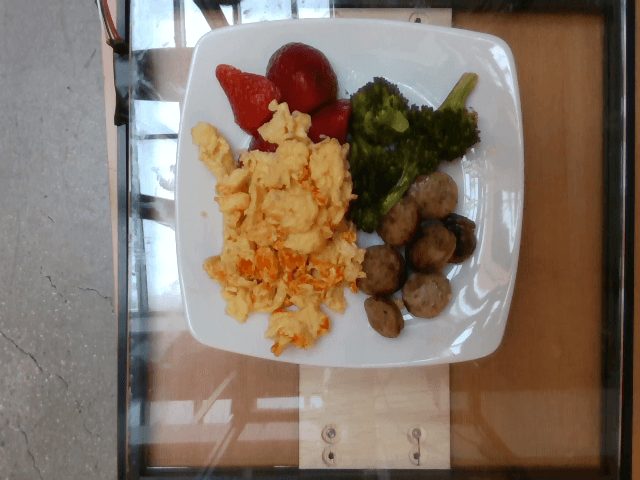
The most impressive development in AI food logging is the photo calorie counter. Apps like ProteinLog now allow you to simply take a picture of your plate. The AI analyzes the image, identifies each individual food item (like "grilled chicken," "brown rice," and "broccoli"), estimates the volume of each, and calculates the total calories and macros. What used to take several minutes of manual entry can now be done in the time it takes to snap a photo. It feels like magic, but it's the result of training complex models on millions of food images.
Just Say What You Ate
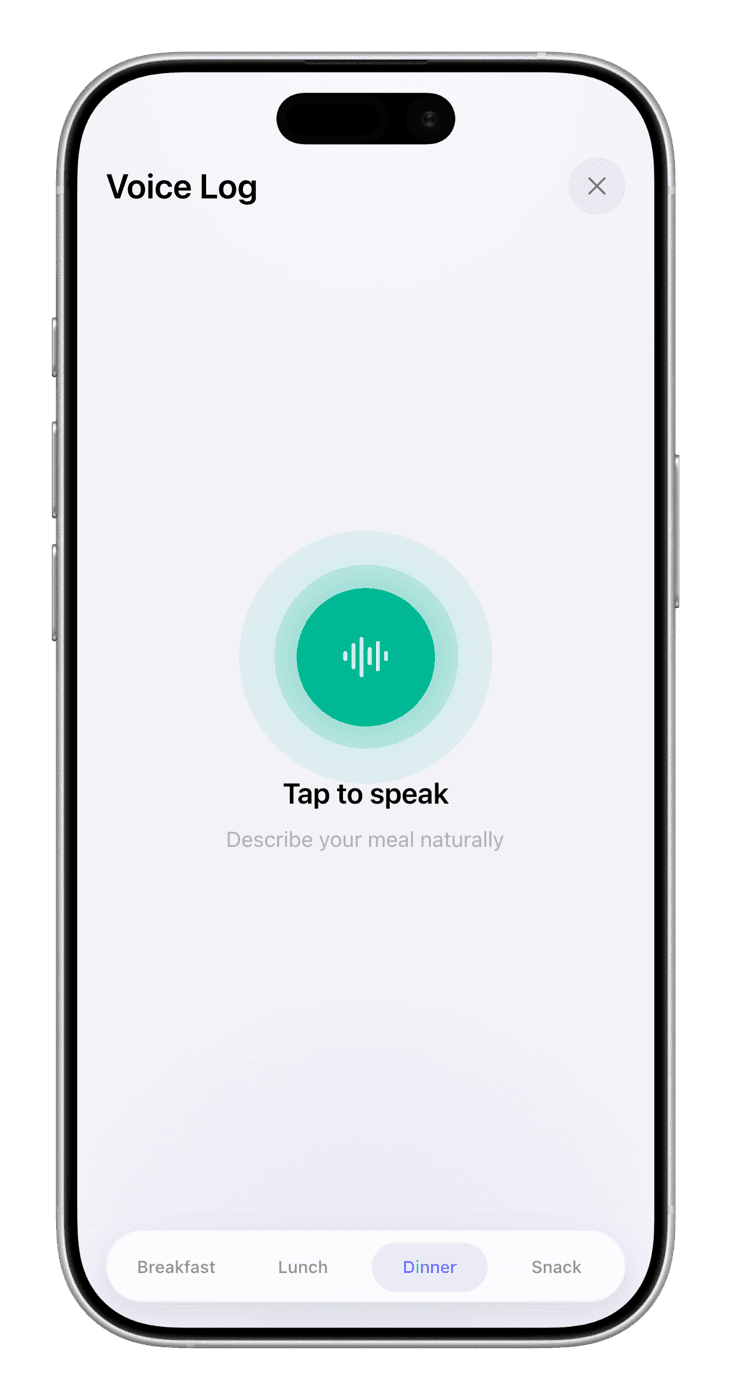
Another powerful AI feature is voice logging. Instead of typing, you can simply speak to your phone. For example, you could say, "I had a bowl of oatmeal with a banana and a scoop of protein powder for breakfast." The app's natural language processing will parse this sentence, identify the foods and quantities, and log the meal for you. This is incredibly useful when you're on the go or your hands are full.
AI That Learns Your Habits
A truly smart calorie tracker also learns from your behavior. It recognizes your frequently eaten meals and suggests them to you, making it easy to log your go-to breakfast or lunch with a single tap. Over time, the AI can even make personalized recommendations based on your goals and preferences, acting as a pocket AI nutrition coach.
How Accurate Are AI Calorie Trackers?
This is the million-dollar question. Early attempts at photo logging were often inaccurate, but the technology has improved dramatically. The accuracy of an AI calorie tracker depends on two things: the quality of its AI model and the reliability of its nutrition database. The best apps, like ProteinLog, use AI models that are not only trained on vast datasets but are also fine-tuned by human experts. They combine this with a foundation of verified nutrition data from sources like the USDA, ensuring that the numbers you see are as accurate as possible.
While no method is perfect (even manual logging involves estimation), a good AI tracker is now consistently accurate enough for the vast majority of users to make meaningful progress toward their goals. The small margin of error is a worthy trade-off for the massive improvement in speed and consistency.
Introducing ProteinLog: The Smartest, Fastest AI Calorie Tracker
ProteinLog was designed from the ground up to be an AI-first nutrition app. We believe that the future of food logging is effortless, and our technology reflects that. Our AI photo logger is the fastest and most accurate on the market, allowing you to log even complex meals in seconds. We've paired this with a clean, intuitive interface and a verified nutrition database to create an experience that is both powerful and a joy to use.
If you've given up on calorie tracking in the past because it was too much work, we invite you to experience the difference that a true AI calorie tracker can make.
Frequently Asked Questions
-
How does AI identify food from a picture? It uses a process called computer vision. The AI model has been trained on millions of images of food, allowing it to recognize patterns, shapes, colors, and textures to identify specific food items.
-
Is my data private with an AI calorie tracker? Privacy is a valid concern. Reputable apps like ProteinLog are committed to data privacy. Your food photos and data are used only to provide you with the service and are never sold or shared.
-
Can AI help with portion size estimation? Yes, modern AI models can estimate portion sizes with surprising accuracy by using visual cues and, in some cases, the phone's depth sensors. For the best accuracy, you can quickly confirm or adjust the AI's estimates.

Ready to Track Smarter, Not Harder?
AI photo logging, verified nutrition data, Apple Watch logging, and our free macro calculator use the same targets as goal setup.
Download on the App StoreiPhone & Apple Watch · No ads · Cancel anytime