On this page
For over a decade, MyFitnessPal has been the default answer for anyone wanting to track their calories. It pioneered the category, built a massive food database, and helped millions of people lose weight.
But in 2026, technology has evolved. Users are increasingly frustrated with MyFitnessPal's cluttered interface, intrusive ads, paywalled features (like the barcode scanner), and the tedious nature of manually searching for every single ingredient they eat.
If you are looking for a MyFitnessPal alternative, you have likely come across ProteinLog. Built from the ground up for the AI era, ProteinLog promises to make tracking faster, smarter, and more holistic.
So, which app should you use? Let's break down the ultimate comparison.
Feature Comparison at a Glance
| Feature | MyFitnessPal | ProteinLog |
|---|---|---|
| Primary Logging Method | Manual Search / Barcode | AI Photo / Voice / Barcode |
| Logging Speed | 2-5 minutes per meal | < 5 seconds per meal |
| Apple Watch App | Basic (requires phone) | Advanced (standalone logging) |
| Food Quality Metric | None (Calorie focused) | Eat Well Score |
| Action Button Shortcut | No | Yes |
| Database | Crowdsourced (can be inaccurate) | Verified (USDA & FatSecret) |
1. Logging Speed: Manual vs. AI
The number one reason people quit tracking their macros is that it takes too much time.
MyFitnessPal: Logging a complex meal like a homemade chicken salad requires you to search for chicken, estimate the weight, search for lettuce, search for tomatoes, search for olive oil, and search for feta cheese. It turns eating into a data-entry job.
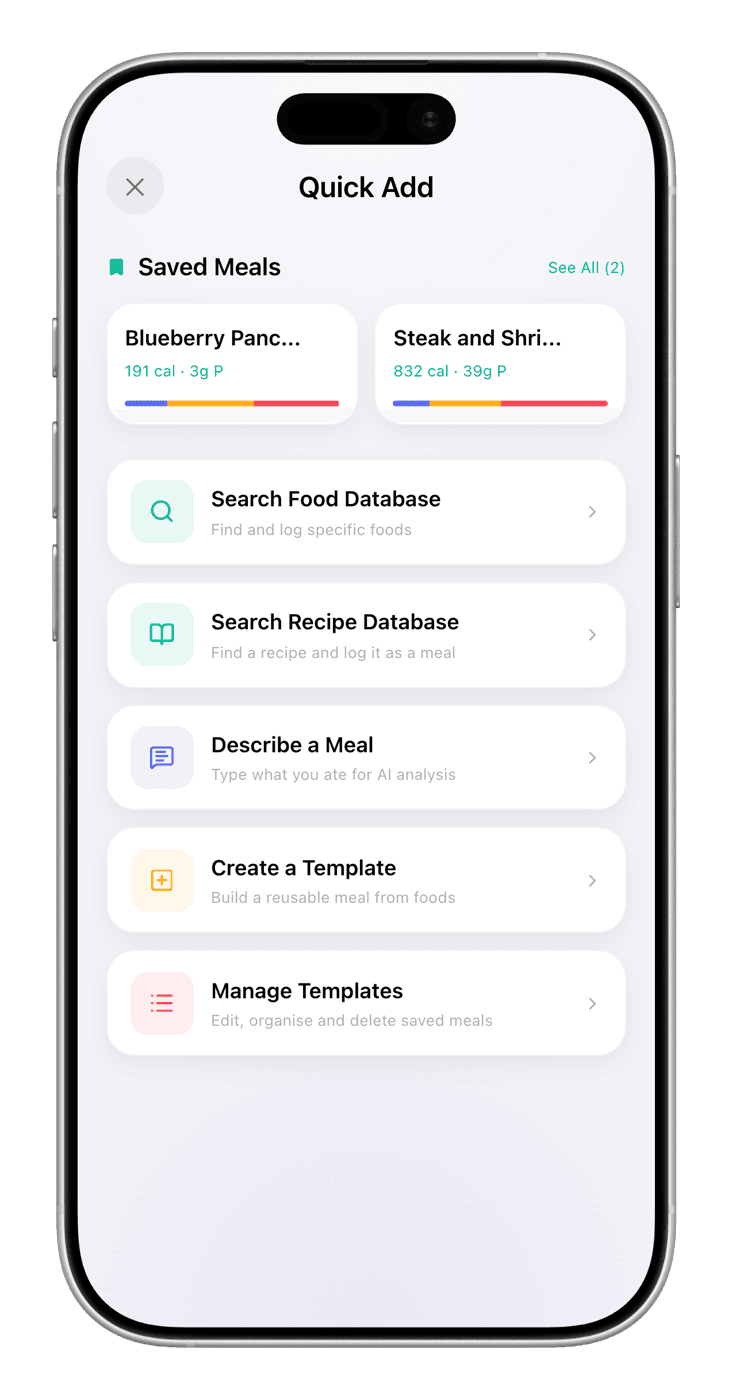
ProteinLog: Logging is virtually instantaneous. You simply point your camera at the chicken salad and snap a photo. ProteinLog's AI identifies the ingredients, estimates the portion sizes, and logs the entire meal in seconds. If you don't want to take a photo, you can use Voice Logging: just say, "I had a chicken salad with feta and olive oil," and it's done.
Winner: ProteinLog
2. The Apple Watch Experience
If you wear an Apple Watch, you want to use it to reduce your screen time, not increase it.
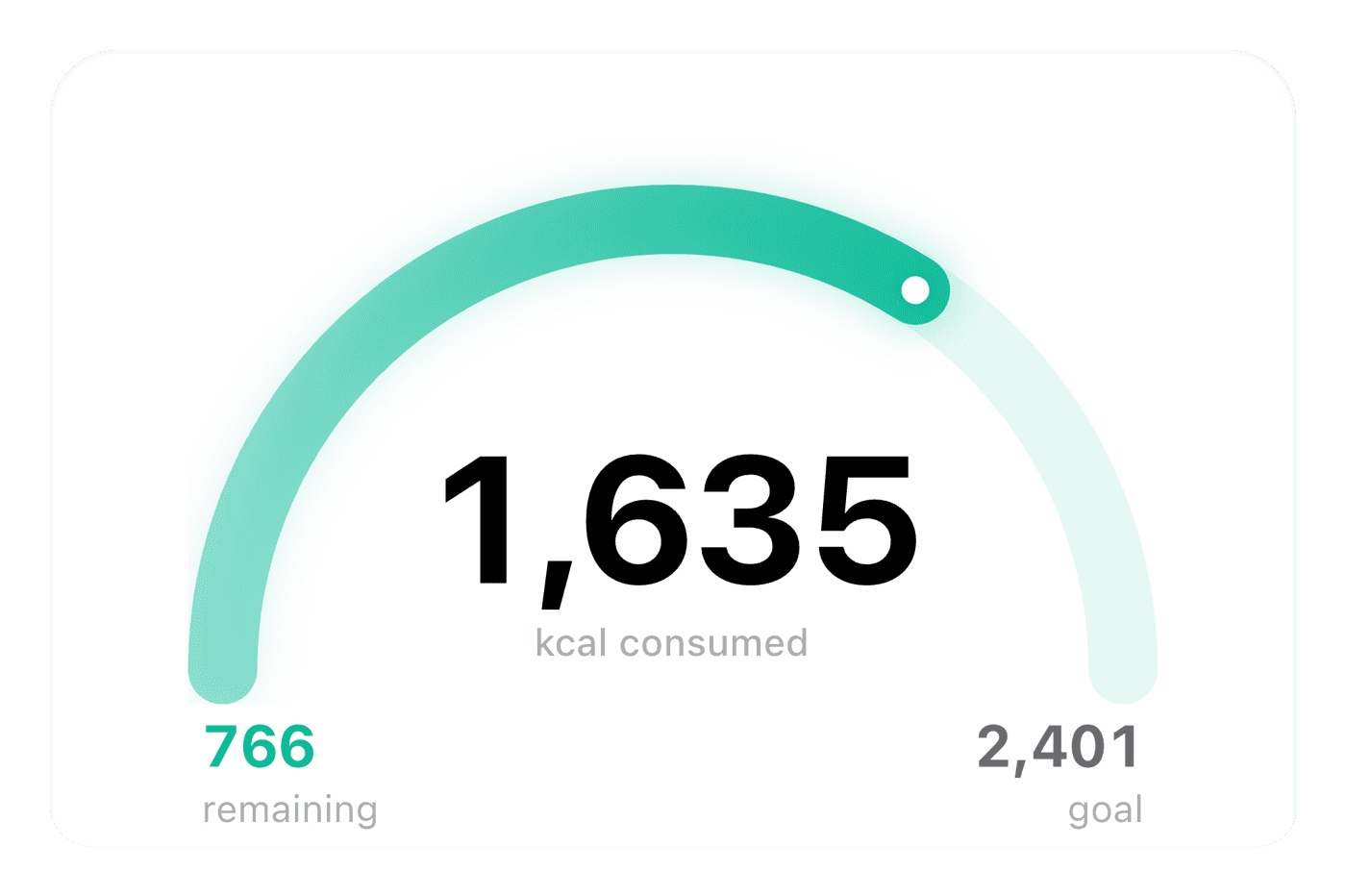
MyFitnessPal: The watch app is essentially a glorified dashboard. You can see your remaining calories, but to actually log a meal, you almost always have to pull out your iPhone.
ProteinLog: ProteinLog treats the Apple Watch as a primary device. You can check your macros on your watch face via complications, and you can quick-log meals directly from your wrist. If you have an Apple Watch Ultra, you can even map ProteinLog to the Action Button for instant voice logging without even opening the app.
Winner: ProteinLog
3. Data Accuracy: Crowdsourced vs. Verified
A calorie tracker is only as good as its database.
MyFitnessPal: Because MFP relies heavily on user-generated entries, the database is massive but plagued with inaccuracies. You might search for "banana" and find 10 different entries with wildly different calorie counts.
ProteinLog: ProteinLog uses verified databases powered by the USDA and FatSecret. When the AI identifies a food, or when you scan a barcode, you can trust that the macro and micronutrient data is scientifically accurate.
Winner: Tie (MFP has more obscure local brands, but ProteinLog is more accurate)
4. Beyond Calories: The Eat Well Score
MyFitnessPal: The app is built entirely around the "If It Fits Your Macros" (IIFYM) philosophy. As long as you hit your calorie and macro targets, the app considers it a successful day.
ProteinLog: We know that 1,500 calories of processed food is not the same as 1,500 calories of whole foods. ProteinLog introduces the Eat Well Score, which tracks five key healthy eating goals: Vegetables, Fruit, Whole Grains, Protein, and Fiber. It helps you build healthier, long-term eating habits by tracking food quality alongside calories rather than just starving yourself to hit a number.
Winner: ProteinLog
5. Pricing
MyFitnessPal: The free version is heavily ad-supported, and essential features like the barcode scanner and macro-level breakdowns are locked behind MyFitnessPal Premium, which costs $79.99/year (or $19.99/month).
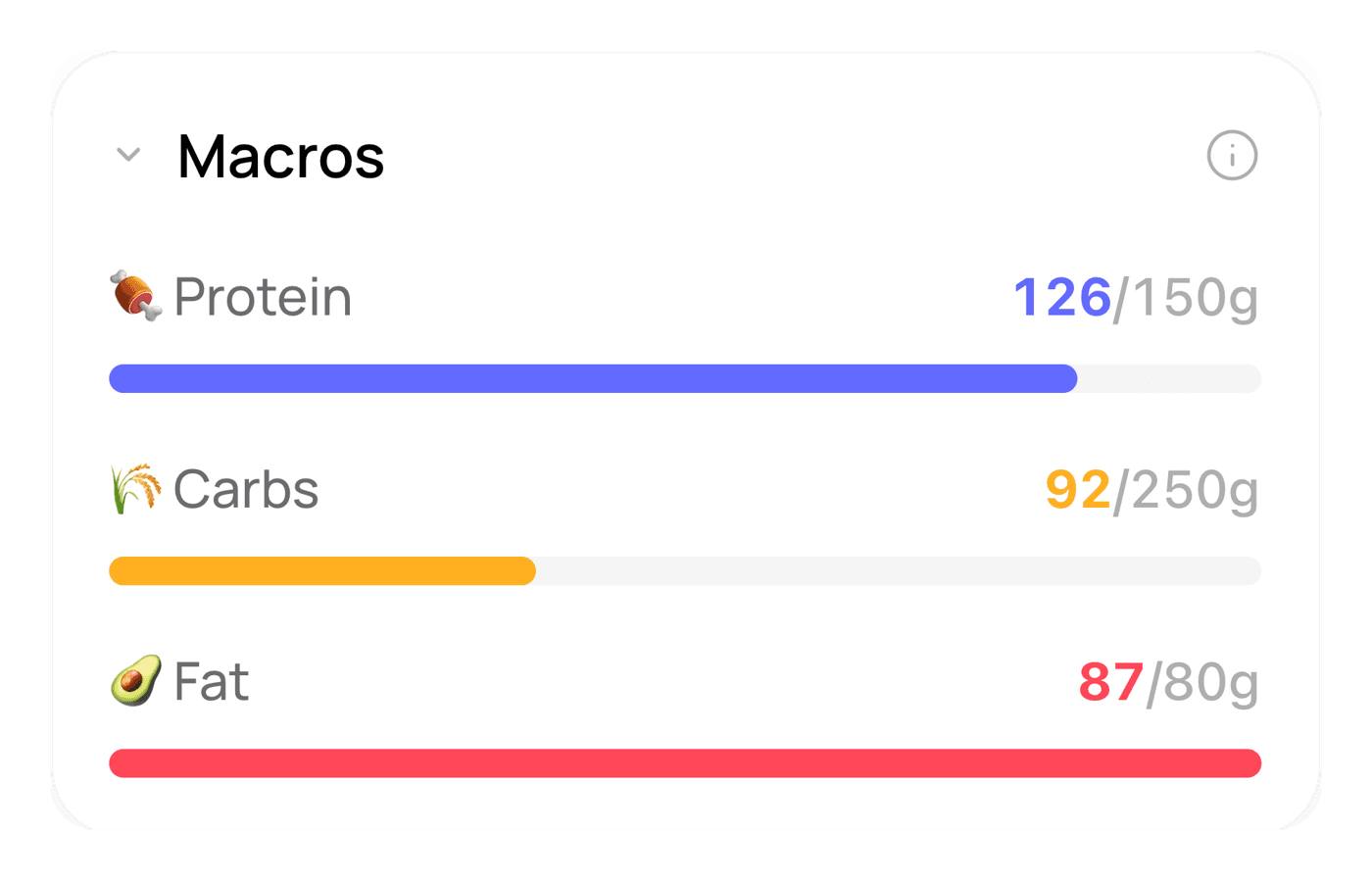
ProteinLog: ProteinLog offers a clean, ad-free experience. The premium subscription, which unlocks unlimited AI photo logging, voice logging, the Eat Well Score, and full Apple Watch integration, is $69.99/year (or $1.99/week).
Winner: ProteinLog (Better features for the same price)
The Verdict
MyFitnessPal was revolutionary when it launched in 2005. But in 2026, manually typing your food into a search bar feels like using a flip phone in the smartphone era.
If you want a tracker that is fast, frictionless, and actually helps you improve the quality of your diet, ProteinLog is the superior MyFitnessPal alternative. The AI photo logging alone will save you hours every month, making you far more likely to stick to your goals.
Ready to upgrade your nutrition tracking? Download ProteinLog on the App Store today.

Ready to Track Smarter, Not Harder?
AI photo logging, verified nutrition data, Apple Watch logging, and our free macro calculator use the same targets as goal setup.
Download on the App StoreiPhone & Apple Watch · No ads · Cancel anytime